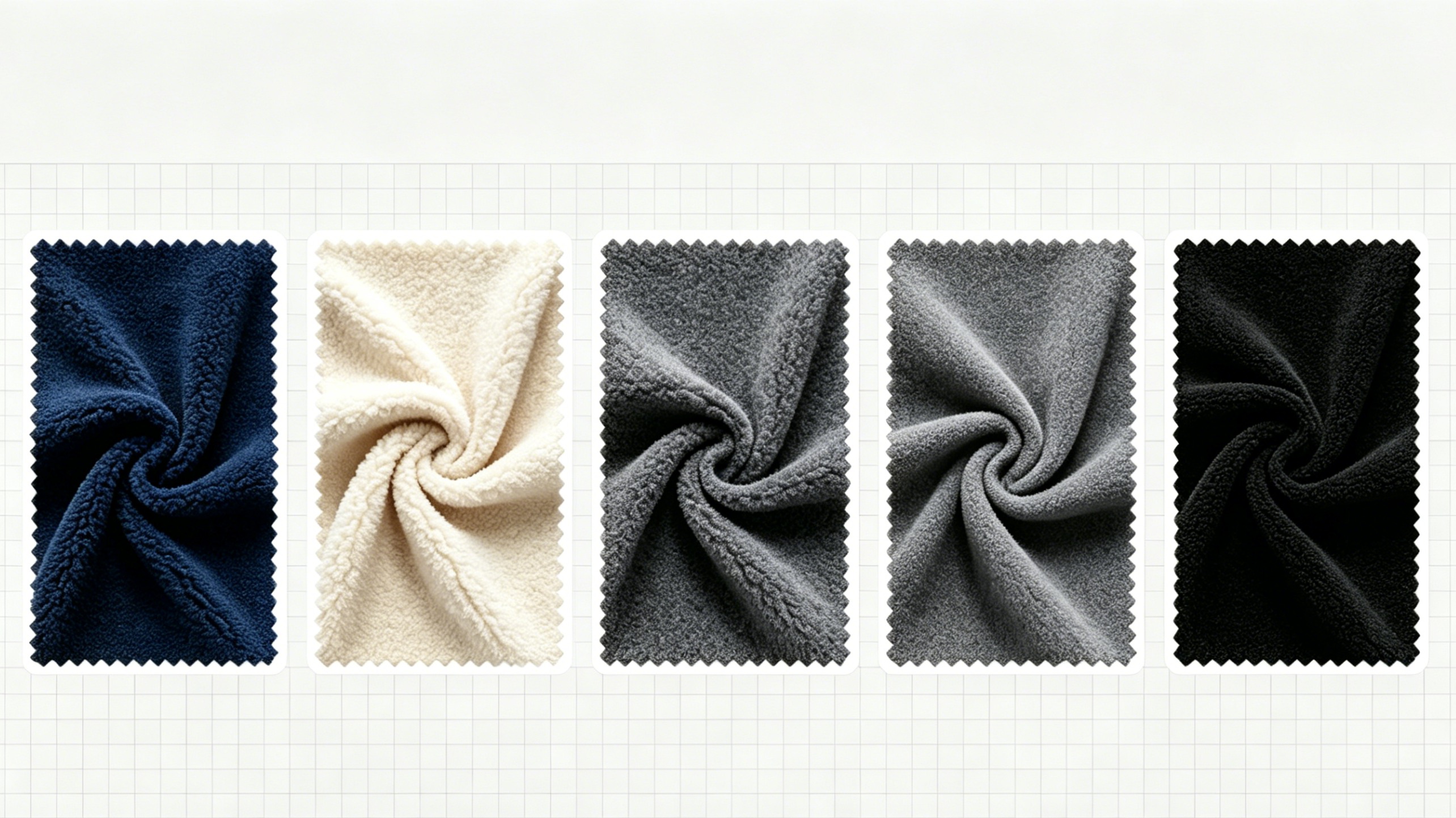
Shumë blerës të materialit fleec fokusohen vetëm në çmim dhe ndjesinë e dorës. Ata porositen me sasi të mëdha thjesht bazuar në pamjen e mostrës, duke përfunduar me probleme si cilësi e papërshtatshme, formimi i bollëkave, shkëputja e pluhurit, trashësi e papërshtatshme, shkurtrimi dhe deformimi i produkteve të përfunduara.
Në fakt, nuk ka një material fleec premium universal. Dallimet në cilësi, ndjesinë e dorës, qëndrueshmërinë dhe skenarët e zbatimit reflektohen të gjitha në parametrat teknikë të tij. Blerja pa njohur këta parametra është në thelb blerje e verbër.
Ky udhëzues shpjegon në mënyrë të hollësishme parametrat kryesorë dhe pengesat e zakonshme të blerjes së materialeve me strukturë fleecë, duke ndihmuar edhe blerësit e rinj të fillojnë shpejt.
Parametrat Bazë të Kategorisë
Zgjedhja e gabuar e materialit është shkaku kryesor i blerjeve të papërshtatshme. Blerësit e rinj shpesh ngatërrojnë fleecën me një anë, me dy anë, me pile të gjatë dhe me pile të shkurtër. Edhe pse të gjitha janë fleecë, ato ndryshojnë shumë në teksturë dhe në zbatim.
1. Fleece me një anë vs Fleece me dy anë
Fleece me një anë ka pile fleecë në njërën anë dhe një bazë të rrafshët në anën tjetër. Është e lehtë dhe e hollë, dhe përdoret gjerësisht si brendësi e veshjeve, sweatshirts të lehta dhe produkte të tjera me kërkesa të ulëta për ngrohje.
Fleece me dy anë ka pile fleecë në të dyja anët. Është më e trashë dhe më e butë, ofron ngrohje shumë më të mirë dhe një ndjesi shtesë të butë në dorë. Është ideale për veshje të jashtme, palltoza dimërore dhe veshje të brendshme termike.
2. Fleece me pile të shkurtër vs Fleece me pile të gjatë
Fleece me pile të shkurtër luan me pile të holla dhe të rregullta dhe performancë të shkëlqyer kundër formimit të bollëkut. Si lloji më i përdorur në treg, është i përsosur për veshjet e përditshme.
Fleece me pile të gjatë ka një teksturë më të mbushur dhe më të butë, por është e prirë për ngjitjen e pluhurit dhe heqjen e lehtë të thërrmave. Është më e përshtatshme për materiale dekorative, sesa për veshje të ngushta ose artikuj që kërkojnë larje të shpeshta.
3. Fleece me funksione speciale
Fleece kationike ofron gradientë ngjyrash të pasura dhe qëndrueshmëri të shkëlqyer ngjyrash kundër zhblerjes, duke e bërë zgjedhjen kryesore për veshjet e lartës klasë. Fleece me elasticitet të lartë ofron shtrirje të shkëlqyer për të përshtatur mirë formën e trupit, prandaj përdoret zakonisht për veshje sportive dhe veshje termike të holla. Specialistët e përvojuar zgjedhin gjithmonë kategoritë e materialeve sipas pozicionimit të produktit, për të shmangur zgjedhjen e pavendosur.
Specifikimet kryesore: Pesha dhe Gjerësia — Kyçi i kushtimit dhe përdorimit të materialeve
Pesha dhe gjerësia e materialit janë dy parametra vendimtarë për kostot e materialit me pëllumb, si dhe zona të zakonshme ku disa furnitorë e shpërfaqin tepricisht të dhënat dhe kursajnë në cilësi. Një kuptim i qartë i këtyre dy treguesve ju ndihmon të kontrolloni efektivisht trashësinë e materialit dhe të zvogëloni humbjet e materialeve.
1. Pesha e materialit: Përcakton trashësinë dhe ngrohjen
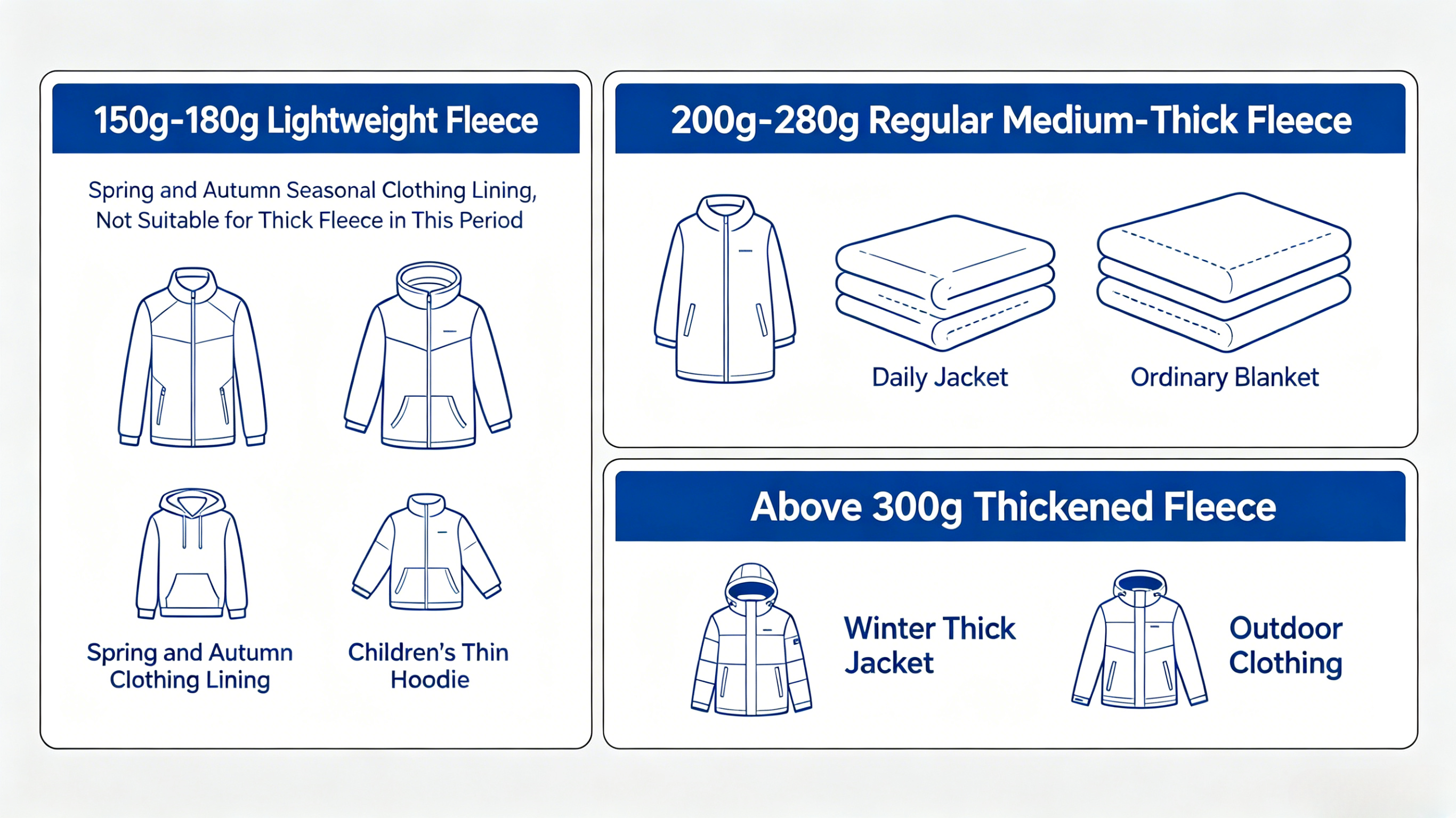
Pesha e materialit me pëllumb matet në gram për metër katror (g/㎡). Në përgjithësi, sa më e lartë është pesha, aq më e trashë dhe më e dendur është struktura e materialit, aq më mirë është aftësia e tij për ruajtjen e nxehtësisë dhe aq më e lartë është çmimi i tij.
150g–180g: Lloji i lehtë, për brezat e pranverës dhe vjeshtës dhe për topset e holla për fëmijë;
200g–280g: Lloji standard i mesëm–i rëndë, për veshje të çliruara, pallto të zakonshme dhe shumicën e tekstilit shtëpiak;
Mbi 300g: Lloji i rëndë me ngrohje të përsosur, për pallto të rënda dimërore, pallto ngrohëse premium dhe veshje jashtë shtëpie.
2. Gjerësia e materialit: Ndikon në humbjet gjatë prerjes dhe në kostot e përgjithshme
Gjerësitë e zakonshme të fleecit në treg janë 160 cm, 180 cm dhe 200 cm, ndërsa gjerësitë personalizuara janë të disponueshme me kërkesë. Gjerësia ndikon drejtpërdrejt në përdorimin e materialit. Një gjerësi joadekuate do të prodhojë sasi të mëdha të mbetjeve të lëndës së parë dhe do të rrisë kostot e prodhimit.
gjerësia prej 150 cm është ekonomike për artikuj të vegjël, veshje për fëmijë dhe aksesorë. Për veshjet e jashtme të mëdha, pallat e gjera dhe tekstilet e brendshme me sipërfaqe të madhe, zgjidhni materiale me gjerësi 180 cm ose më shumë për të minimizuar humbjet gjatë prerjes dhe për të ulur kostot e përgjithshme.
Parametrat e Procesit dhe të Densitetit: Kontrolloni Pamjen dhe Qëndrueshmërinë
Pesha dhe gjerësia formojnë vetitë bazë të fleecit, ndërsa dendësia e materialit dhe teknologjia e përpunimit të pileve përcaktojnë rezistencën e tij kundër formimit të bollëkave, shpërndarjes së pluhurit dhe deformimit — dallimet kryesore midis produkteve të lartë cilësore dhe atyre të ulët cilësore.
1. Dendësia dhe Numri i Telave
Dendësia më e lartë do të thotë një ngjitje më të ngushtë. Pilet e materialit ngjiten më fort, duke ofruar performancë më të mirë kundër formimit të bollëkave, humbjes së pluhurit dhe deformimit.
Nuk janë të nevojshme formula të komplikuara për identifikim. Tërhiqni butësisht materialin: nëse nuk ka hapje të dukshme, rikthehet shpejt dhe mban pilet të ngushta, është fleci i lartë cilësie me dendësi të lartë. Nëse pas tërheqjes shfaqen hapje dhe pilet duket të jenë të lira, është material me dendësi të ulët dhe cilësi të dobët.
Fleci ka pile rrotull, të plota, me madhësi të njëjtë dhe të radhitura në mënyrë të rregullt, me sipërfaqe të lëmuar dhe pamje të përsosur. Fleci i dobët ka pile të papërsosura, teksturë të rrugëzuar, zona pa pile dhe grumbuj. Kjo jo vetëm që dëmton pamjen e produkteve të përfunduara, por gjithashtu shkakton lehtësisht formimin e grumbujve të vogël në pjesa të caktuara.
Këshilla praktike për të shmangur rreziqet e blerjes
Blerja e flecit nuk duhet kurrë të mbështetet thjesht në ndjesinë me dorë dhe në çmim. Kontrolli i parametrave të lidhur është thelbi. Duke kuptuar plotësisht kategoritë e materialeve, peshën, gjerësinë, teknikën dhe standartet e pranimit, blerësit mund të zgjedhin materiale që përshtaten me kërkesat e produktit, të shmangin pagimin e tepërt për funksione të panevojshme dhe të shmangin produkte me cilësi të ulët që ofrohen me çmime të ulëta.
Blerësit që nuk janë të sigurt për përzgjedhjen e parametrave, inspektimin e cilësisë së pëlhurës ose sigurimin e besueshëm mund t'u drejtohen profesionistëve për mbështetje në zgjedhjen e pëlhurave të duhura dhe eliminimin e rreziqeve të prokurimit.