Polar fleece fabric is a preferred synthetic material for winter warmth and outdoor activities.
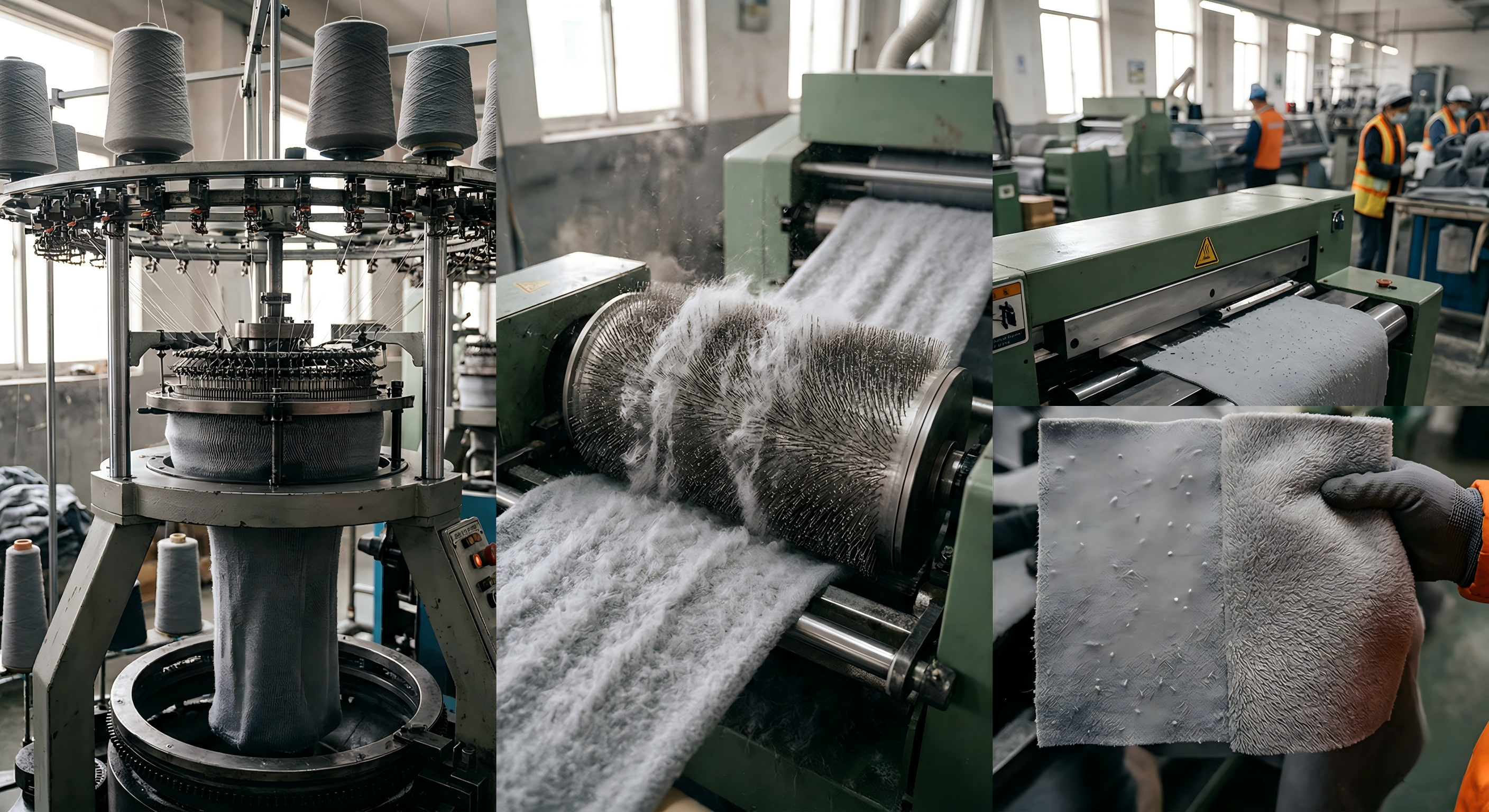
Polar fleece is a knitted fabric produced using large circular knitting machines, followed by a series of complex processes including dyeing, brushing, raising, shearing, and anti-pilling finishing. The front surface features evenly distributed and relatively sparse fleece particles, while the reverse side has dense, fine brushing with good elasticity, creating a unique air insulation layer.
Core Advantages and Technical Parameters of Polar Fleece Fabric
Excellent warmth-to-weight ratio:
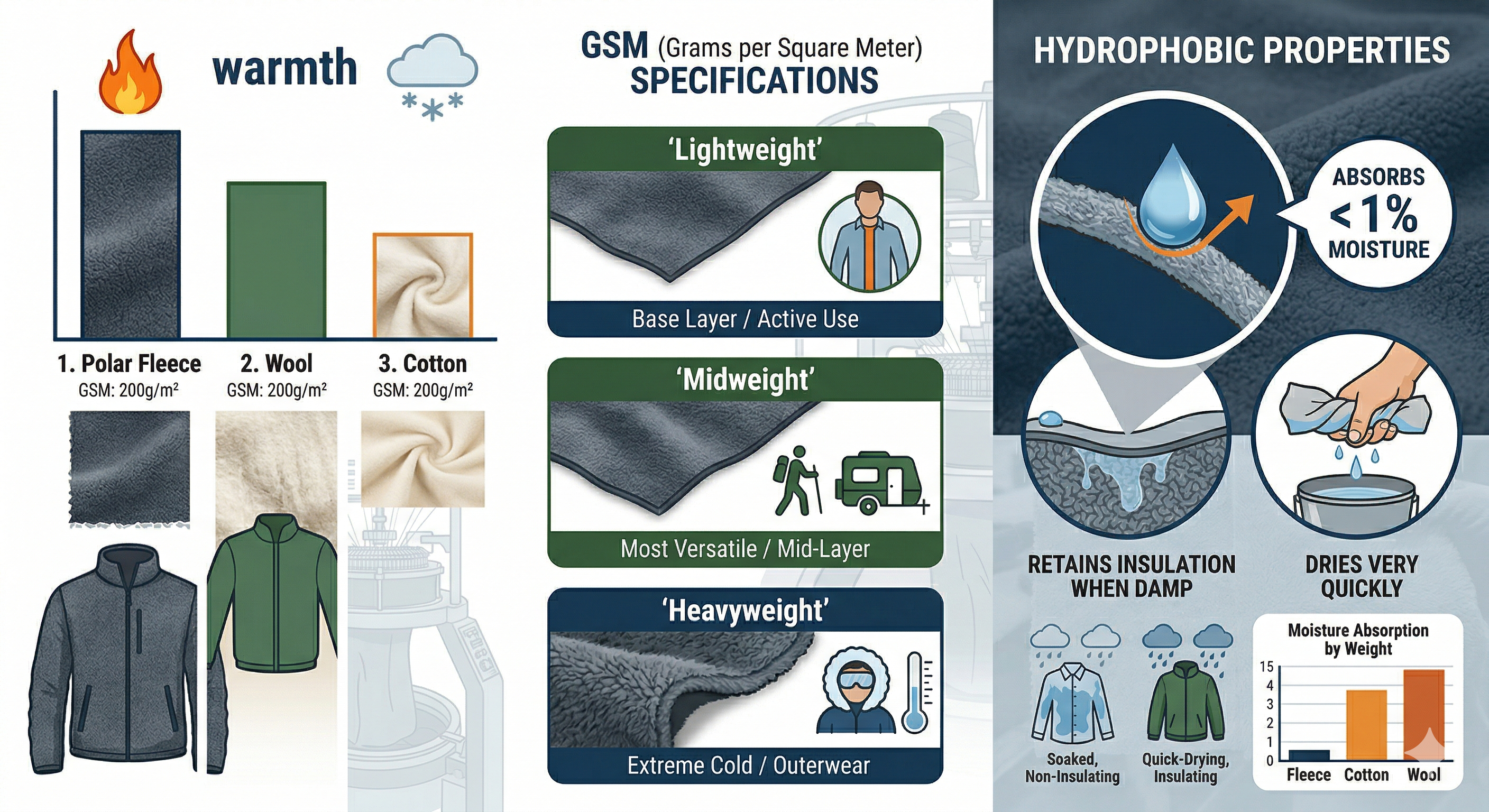
At the same GSM, polar fleece typically provides twice the warmth of wool and four times that of cotton.
GSM specifications:
Mainstream options in the market include:
- Lightweight (100–200 g/m², suitable for inner layers)
- Midweight (200–300 g/m², the most versatile choice)
- Heavyweight (300+ g/m², suitable for extreme cold outerwear)
Hydrophobic properties:
Polar fleece absorbs only about 1% of its own weight in moisture. Even in damp environments, it retains most of its insulating performance and dries very quickly.
How to Identify High-Quality Polar Fleece
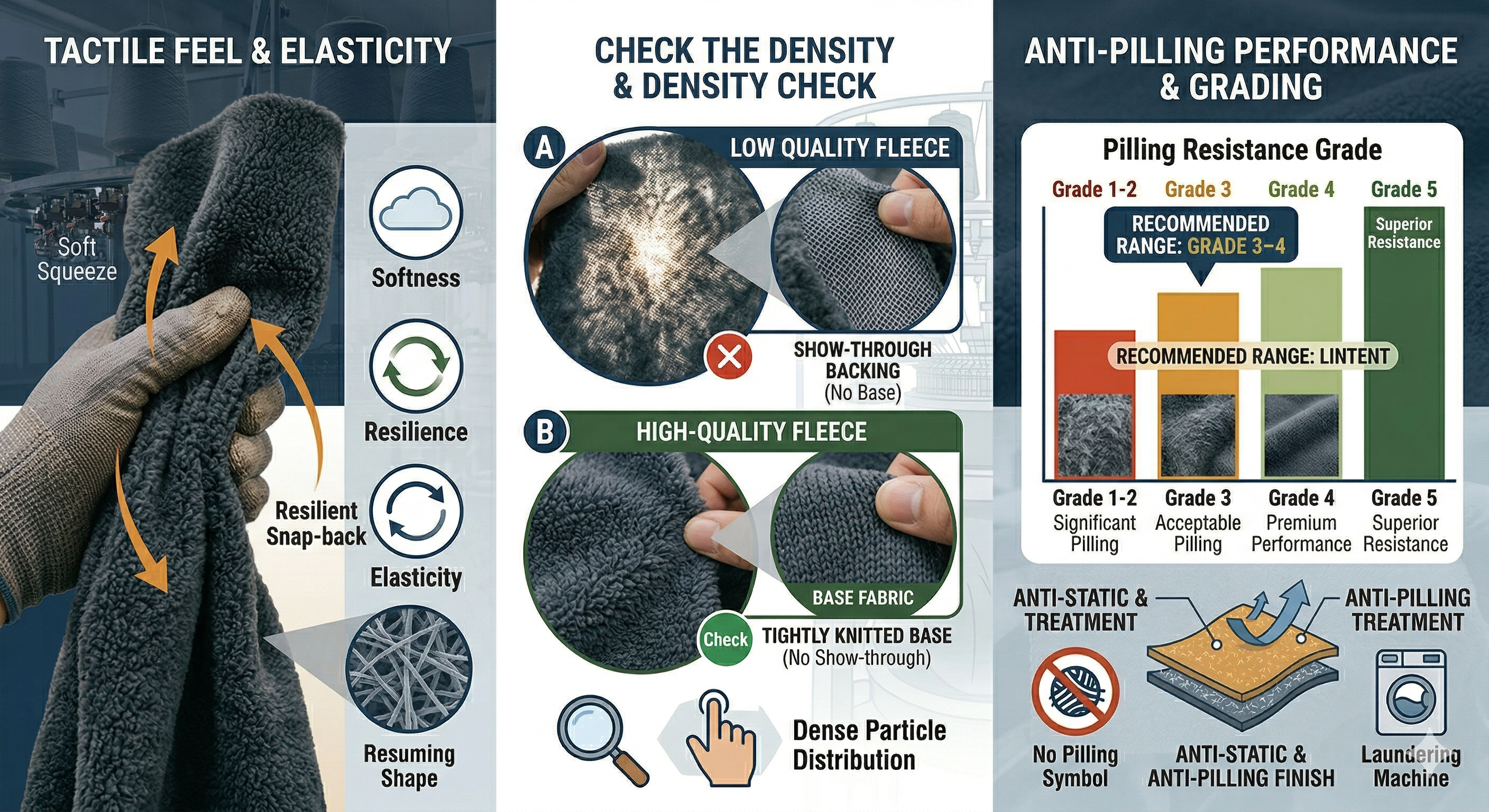
Check the hand feel:
High-quality fleece feels soft, elastic, and resilient, with evenly distributed and fine fleece particles.
Check the density:
Premium fabrics have a tightly knitted base, with minimal show-through (no visible backing).
Anti-pilling performance:
Leading polar fleece fabrics are treated with anti-static and anti-pilling finishes. It is recommended to choose materials rated at Grade 3–4 for pilling resistance.
Application Scenarios of Polar Fleece Fabric
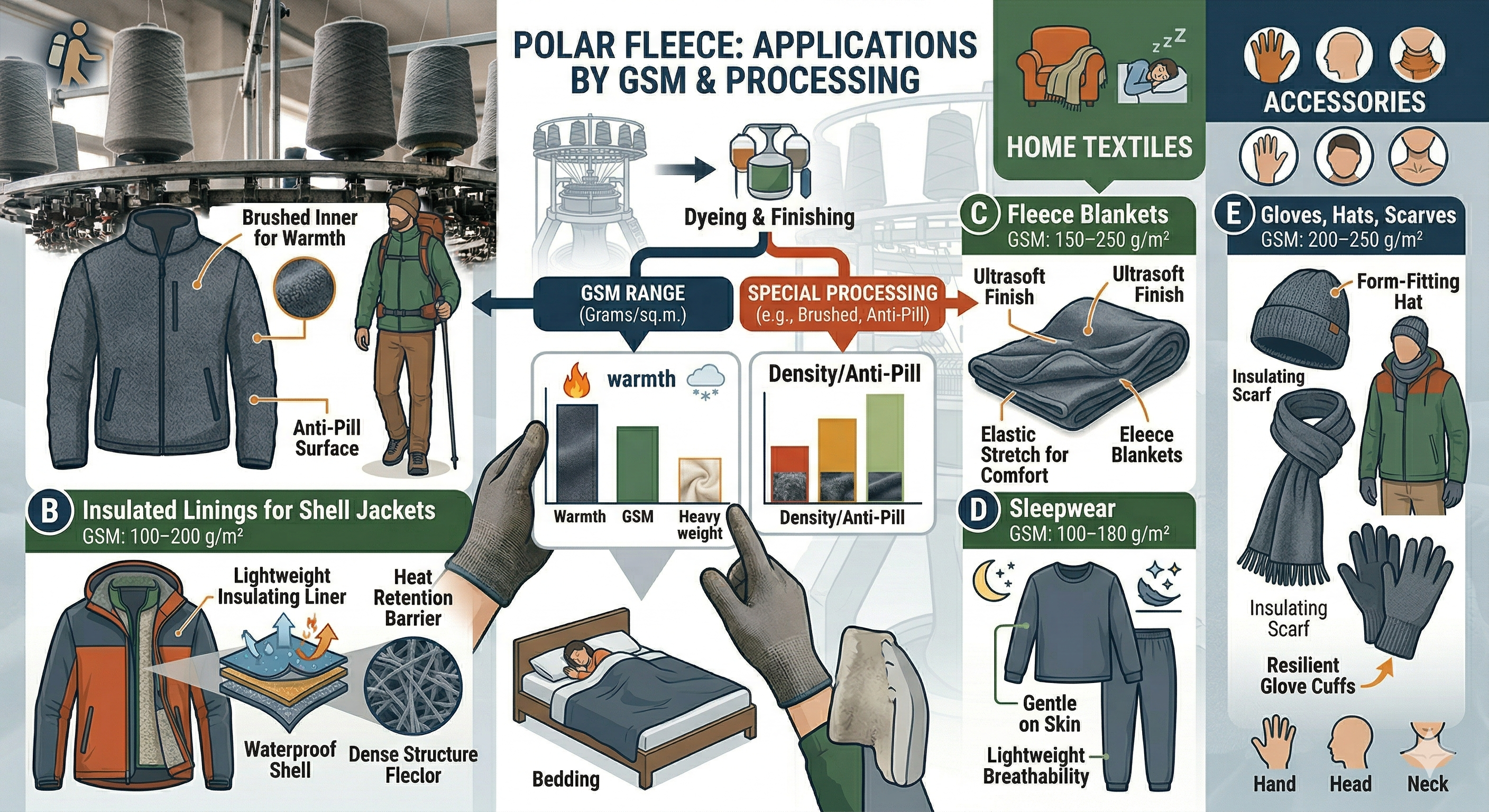
Depending on GSM and processing techniques, polar fleece is widely used in:
- Outdoor apparel: fleece jackets, insulated linings for shell jackets
- Home textiles: fleece blankets, sleepwear, bedding
- Accessories: gloves, hats, scarves